
How much does a corporate event cost in Singapore?
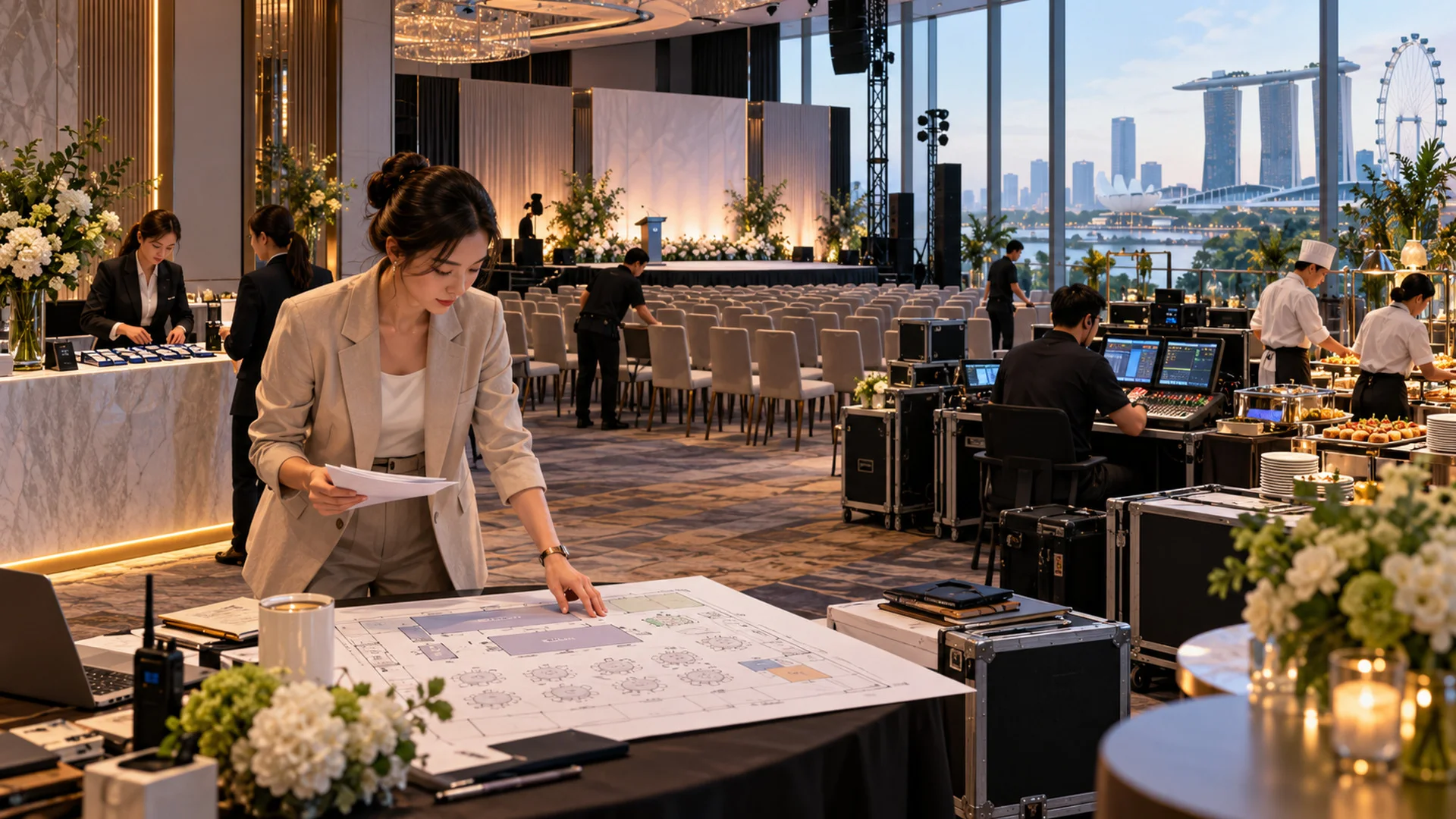
Build a corporate event budget by separating venue and food, décor, programme, technical production and event management. Compare like-for-like scopes before committing spend.
How much does a corporate event cost?
A corporate event in Singapore has no useful universal price without a guest count, venue and programme. Start with five budget headings: venue and food, décor, programme and guest activities, technical production, and event management. The complete cost is the sum of the agreed scopes, rather than a supplier’s starting figure multiplied by attendance.
For an early comparison, event management can fall around SGD 1,545 to 2,480 for different levels of coordination. An emcee or emcee-and-DJ programme can be around SGD 2,500 to 3,000 for an initial four-hour brief. A stage composition with balloon styling can be around SGD 1,450 to 2,175. These allowances cover different services and should not be read as an all-in event price.
Separate venue and food from event production
Confirm whether the venue charges by room, table, guest or a minimum spend. Use the attendance basis and minimum commitment in its quotation. Include any extra hours, corkage, equipment or other separately charged requirements before comparing venues.
Check meal format, dietary requirements and service timing against the programme. A seated dinner, networking reception and daytime staff gathering use space and catering differently. Ask the venue to state which furniture, staffing and technical facilities are already included.
The complete budget is the confirmed venue and food cost plus production, activities, management and other agreed charges. A production allowance alone is not a per-person event price.
Allocate décor by area and guest activities by purpose
Mark the stage, entrance and photo point on the floor plan. A straightforward printed backdrop can be around SGD 700 to 1,050, while a more developed stage treatment requires a different allocation. Prioritise the areas that support the occasion before adding optional table or aisle styling.
For a photo booth, an initial allowance of around SGD 550 to 950 covers different operating durations. Choose the window around arrivals and programme breaks. Confirm space, power, print design and queue management against the actual guest flow.
Avoid assuming that a décor concept includes every prop or that an activity price covers the full event. Ask for clear boundaries between styling, equipment, staffing and onsite coordination.
Match hosts and AV to the actual programme
An emcee-only brief and a programme with a DJ have different responsibilities. Confirm language, tone, rehearsals, games, awards and the event end time before comparing proposals. Keep guest prizes and gifts in the budget if they are part of the programme.
Technical production should follow the run sheet. Identify microphones, sound coverage, screens, presentation files, lighting and operators. Check existing venue equipment with the event team before adding external systems or assuming the room is ready.
Do not use a host’s fee as evidence that sound, lighting and screens are included. Agree who supplies each system, tests it and handles cues during the event.
Use an itemised budget for event management decisions
An itemised budget should compare proposals against the same event duration, guest count, decorated areas and delivery responsibilities. Identify what is included, excluded or still awaiting a venue check. Keep a separate allowance for changes approved after the brief, with an internal owner for authorising them.
Event management should have a defined task list and onsite window. More vendors, concept development and additional review rounds create more work than a straightforward coordination brief. Supplier costs remain separate unless the proposal explicitly includes them.
Before approval, reconcile venue access, setup, removal, transport, labour and taxes across every supplier. Remove duplicated inclusions and price genuine gaps. This gives HR and procurement a budget they can explain to stakeholders.
Prepare one brief before requesting comparable quotations
Share the event purpose, proposed date, attendance, venue status, programme and decision process. State the budget limit and which work your company will handle. A consistent brief makes quotations easier to compare and reduces avoidable changes later.
Use corporate event planning to connect the programme, suppliers and venue. For themed room treatments, the company dinner event decoration and company family day event decoration guides help define the relevant areas.