
How much does it cost for corporate event decor? Price Guide for Event Backdrop & Props 2026
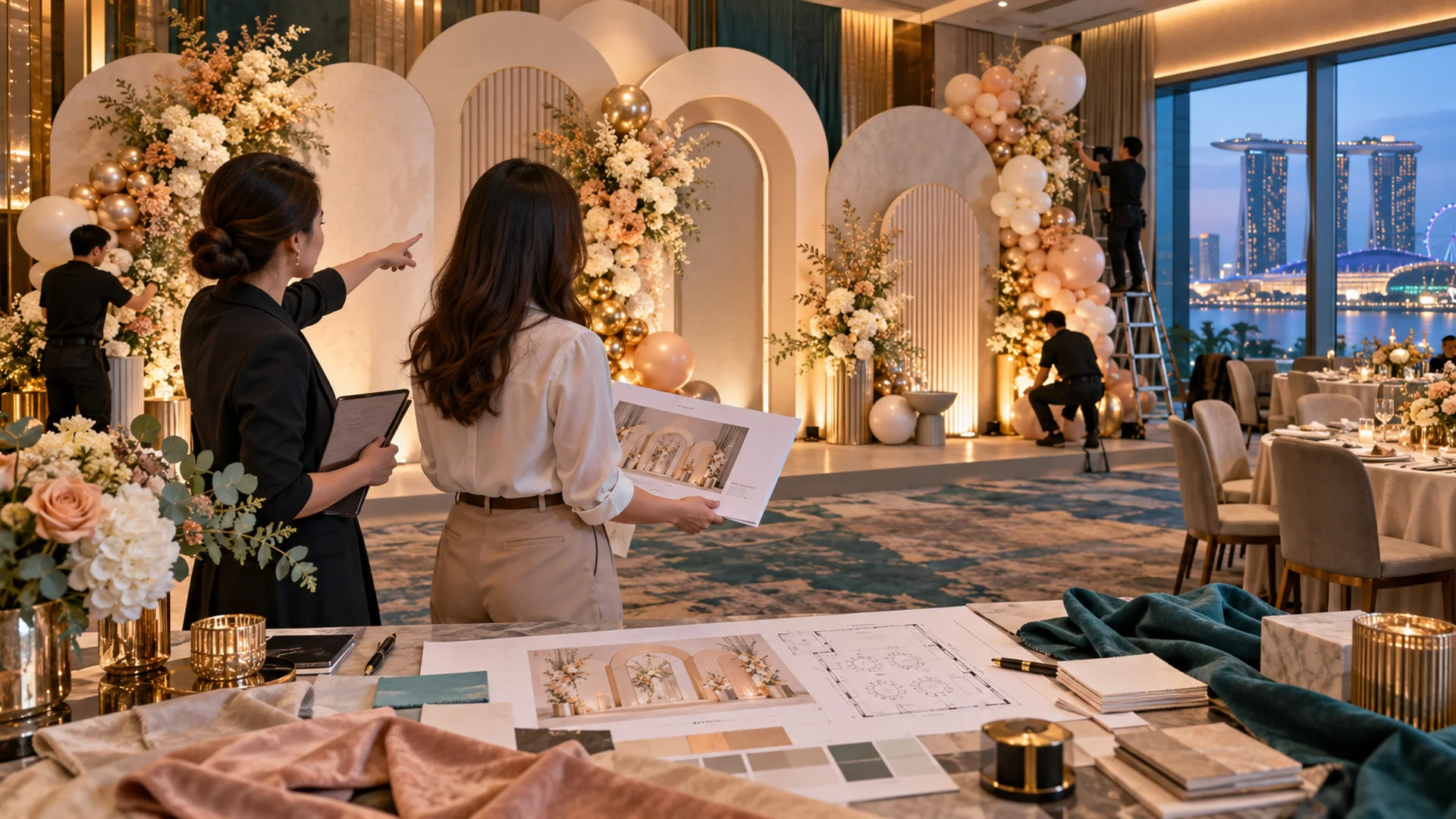
Plan corporate event décor by area first: the stage, entrance and guest spaces. Set a budget for each focal point, then choose backdrops, props and lighting around the programme.
Plan corporate event décor by area first
Corporate event décor is easier to plan when you think in terms of areas before individual products. Mark the stage, entrance, photo area and dining space on the venue plan. Decide where guests will spend time, where photographs will be taken and which areas need to communicate the theme. A well-considered focal point has more impact than small decorations spread across every available surface.
For atmospheric styling, allow about SGD 1,500 to 2,500 per focal point. Three focal points, such as a stage landscape, an entrance photo wall and banquet table styling, would therefore suggest about SGD 4,500 to 7,500. This is an initial allocation across three areas, rather than a promise that every installation fits the same budget. Dimensions, materials, quantities, lighting and venue access determine the final proposal.
Decide what is essential before choosing optional details. If the stage carries awards and speeches, prioritise it. If the event centres on networking and photographs, the entrance and photo wall may deserve more attention. Compare proposals against the same areas and installation conditions.
Stage backdrop: frame the event and keep the screen usable
Measure the usable stage width and check whether a screen sits in the middle. A backdrop should frame the event title and theme while leaving presentations, access steps and the speaker visible. Decide how prominently sponsor logos need to appear, and whether the overall look should feel formal, celebratory or casual.
As an initial planning range, a straightforward printed backdrop can be around SGD 700 to 1,050. A more developed stage composition with balloon styling can be around SGD 1,450 to 2,175; a draped stage treatment can be around SGD 1,700 to 2,550. These are different concepts, so compare the actual dimensions and styling rather than treating them as interchangeable packages. Installation, additional props and technical lighting need clear inclusions.
Ask the venue about height limits and any permits or approvals for structures over 10 ft. Check ambient light as well as performance lighting: the backdrop needs to photograph well when there is no act on stage. Confirm whether extra stage lights are required and who will operate them.
Stage landscape: use props without blocking the programme
A low platform and a high stage need different treatment. Plan the view from the audience and the photographer’s position before choosing planters, hedges, a balloon garden or custom themed props. A mix of materials can add texture to a celebratory event, while real plants are often a good starting point for a formal setting.
Layer heights towards the outer corners, leaving the centre clear for speakers, awards and group photographs. Uplights, fairy lights, neon and letter lights can bring the theme and event title forward, but the plan should distinguish decorative lights from the lighting needed to see people clearly. Check cables, fixing methods and power with the venue.
Discuss the programme with a corporate event planner before repeating last year’s purchase order. A new look that suits this year’s occasion shows staff that the event has been planned with care. Keep the design practical: props must leave room for presenters, performers and the stage crew.
Entrance: welcome guests and give photographs a purpose
Choose between a grand arch, a pair of pillars or a photo wall according to the entrance width and guest flow. A small balloon arch might need about SGD 400 to 600; a customised arch-panel feature can be around SGD 500 to 750. Larger footprints and more developed concepts need a separate assessment of dimensions, stability and installation.
For a wide entrance, consider a modular arch that could later move into the ballroom. Plan that move before approving the design. A photo wall can also tie in with photo-booth keepsakes through a consistent colour palette, event title and branding. Leave room for people to queue without blocking registration or the ballroom doors.
Décor stylists usually finish setup and leave before the event begins. If a piece must move during the programme, assign volunteers or hire an event coordinator, confirm the route and allow time in the run sheet. A coordinator on standby gives organisers someone to handle these transitions while they take part in the event.
Reception, cocktail, dining and aisle styling come next
Once the main focal points are covered, consider reception desks, cocktail tables, round or long dining tables and aisle arrangements. These are lower priorities when the budget is tight. Repeating a colour or material can connect the room without requiring a large installation in every area.
Check the venue’s existing linen, centrepieces and tableware before adding more. Keep floral and prop heights compatible with conversation, sightlines and meal service. On long tables, leave space for shared dishes and service; on round tables, check the usable centre area. Keep aisle treatments outside walking routes and emergency exits.
Table styling needs its own quantity and material brief. The focal-point allowance is useful for an initial discussion, but it should not be mistaken for a fixed price per table or multiplied without checking what each arrangement includes.
Compare the scope, access and handover in each proposal
Ask each supplier to show the same decorated areas, dimensions, materials and installation windows. Drapes, panels, balloons, florals, props and lighting are usually separate line items. Clear inclusions give you a say in the look and help prevent missing elements or duplicated costs.
A single bundled figure can work for a formal event where only the background colours and event title change. Stronger themes or a brand identity carried across several areas benefit from a corporate event planner who understands décor, the programme and venue logistics together.
Confirm loading access, lift sizes, setup and removal times, rental returns and responsibility for damage. Ask whether transport, labour, lighting, venue charges and GST are included. All ranges here are indicative planning allowances; customised designs require a quotation against the actual venue and brief.
Choose a décor company with clear day-to-day communication
Email is useful for the first introduction and for keeping quotations, invoices and permit documents in one place. WhatsApp can make day-to-day decisions clearer, especially when the team needs to check a photograph, a colour or a small change. Agree who will answer, how quickly urgent questions can be handled and which decisions need written approval.
A call is usually helpful for a first-time planner. You do not need to be the most artistic person in the room: you need a real person who can explain the options and back you up when stakeholders ask questions. Look for clear answers about the design, practical limitations and responsibility on event day.
For event-specific layouts, see the guides to Christmas event decoration, company dinner event decoration and company family day event decoration.