
Corporate Wellness Activities for Employees: A Day of Choice
Choose corporate wellness activities for employees by energy, access and time, then design a day with genuine options and a sensible pace.
Choose a theme and a useful event outcome
Begin with the experience you want employees to have. A gentle reset, a social day across departments and a skills-based workshop call for different activities. The theme should help people understand the invitation without prescribing how they should feel. One clear idea is easier to communicate than a crowded programme of unrelated sessions.
Use what you know about the audience: work patterns, room availability, likely attendance and how much structured interaction feels appropriate. If you do not know, ask employees for light-touch preferences such as preferred times or activity types. Do not ask for private health disclosures to plan a general corporate event.
Offer several ways to participate
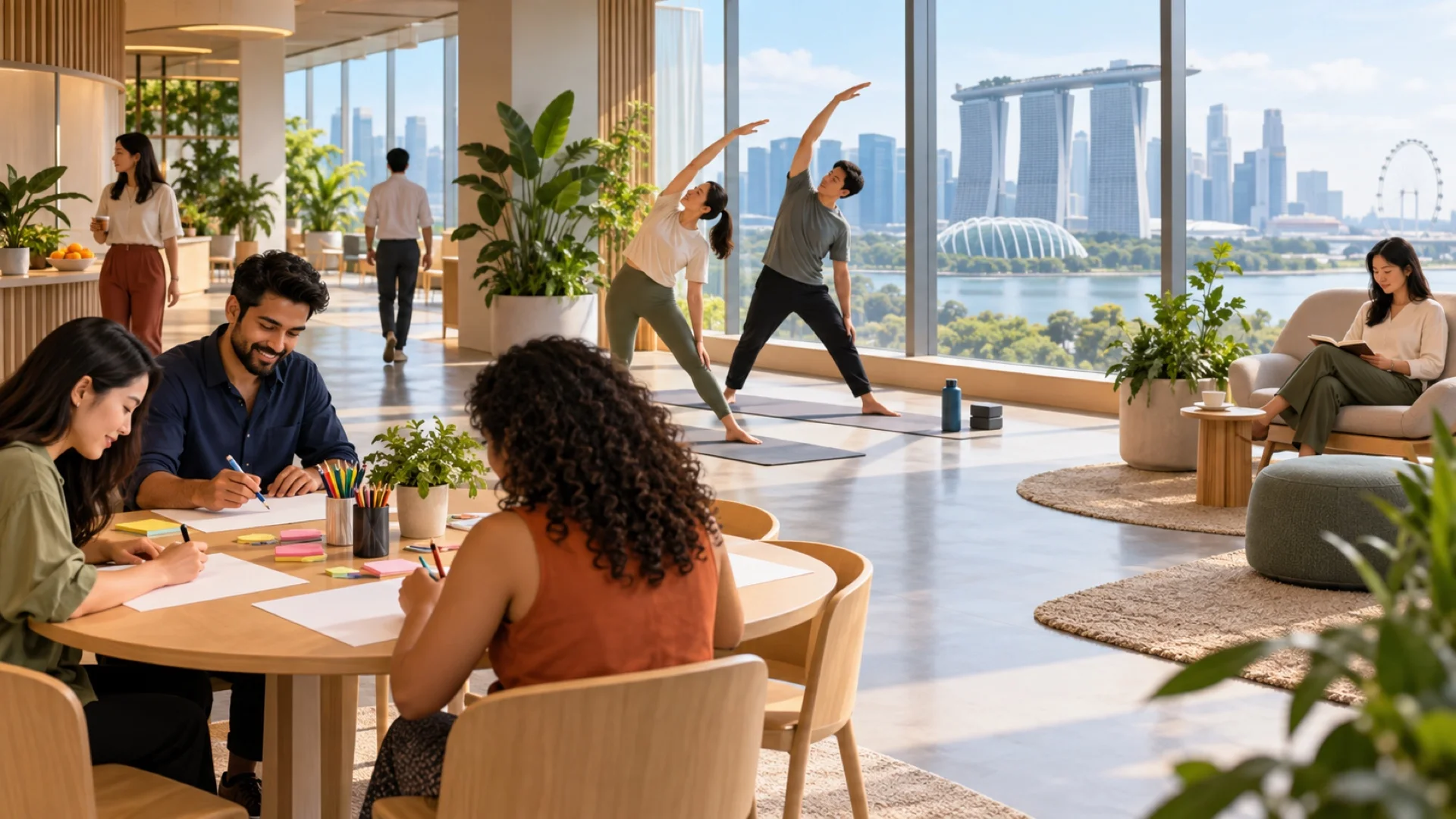
Movement can be a gentle stretch or other accessible facilitated session; creativity can be a hands-on making activity; connection can happen through a small-group conversation or shared task. A quiet reset might be a comfortable seated space or a short guided reflection. These are event formats, not medical interventions, and each needs a clear description and suitable facilitator.
Avoid a single compulsory high-energy activity. Someone may welcome a social station but prefer to skip movement, while another person wants a calm break from conversation. Choice makes the programme easier to join without requiring anyone to explain a personal reason.
- Movement: gentle, adaptable and clearly described
- Creativity: a low-pressure activity with a tangible process
- Connection: small groups with a clear starting prompt
- Quiet reset: seating and space away from the busiest zone
Set a sensible pace for the time available
A short office session works best with one clear activity and a little arrival and closing time. A half-day can support two or three experiences, but every transition needs breathing room. Leave time for refreshments, finding the next room and informal conversation; a schedule that is full on paper can feel rushed in person.
If staff cannot leave work together, repeat smaller sessions or offer staggered entry. Communicate which sessions require advance sign-up and which guests can join casually. Protect facilitator breaks and reset time between groups so a later session receives the same quality as the first.
Make choice real rather than decorative
Parallel stations only work when capacity and timing allow people to choose. If one popular station has a long queue while the quiet option is hidden, the programme has created a bottleneck. Estimate how many participants each activity can host at once, how long a turn takes and whether an alternative has comparable appeal.
Give employees a simple map or host-led introduction, then let them move at their own pace where the format allows. Make it acceptable to watch before joining. Avoid forcing public demonstrations, competition or personal sharing as a condition of participation.
Use the venue to support the flow
Place active and quiet areas far enough apart for both to work. Check sound bleed, ventilation, seating, access routes and storage for activity materials. If food is part of the event, keep queues away from stations and make dietary information available at the point of service.
In Singapore, a weather-dependent outdoor segment needs an indoor plan that can handle the same attendance. The fallback should be part of the run sheet, with a clear decision time and one person authorised to make the call. A venue plan should also show setup and pack-down access.
Gather feedback without overclaiming results
After the day, ask what employees found easy to join, which slots fitted their schedule and which activities they would choose again. Track operational feedback such as queues, room comfort and communication clarity. These answers can improve the next event without turning a pleasant day into an unsupported claim about health or work performance.
Share a short internal recap that thanks participants and explains how feedback will inform the next programme. If the company wants a recurring calendar, use the day to learn which formats merit a deeper pilot rather than assuming every station should become permanent.
Turn the activity shortlist into an organiser brief
Tell the event team the expected headcount, audience mix, date, venue, available hours and whether staff attend together or in shifts. Identify the kind of choice you want and any access requirements. Ask the organiser to show activity capacity, facilitator roles, transitions and the indoor fallback, not just a list of attractive ideas.
For a broader service overview, see Happier's corporate wellness page. The existing wellness planning guide explains the programme pillars; this article helps the company choose the day design before requesting a tailored proposal.
Planning your company event?
Tell us your date, headcount and what the event needs to achieve. We can plan an event around your people and your brand.
Plan your event