Dinner & Dance Entertainment Ideas for Corporate Events
Choose entertainment by the role it plays in the evening, the people in the room and the production conditions, so every act strengthens the celebration instead of feeling like a disconnected add-on.
Decide what the entertainment needs to do
The best entertainment choice starts with function. You may need an opening that instantly signals a special night, a shared experience that connects tables, a polished feature while courses are cleared or a high-energy finish that brings people to the dance floor. Naming that job first makes it easier to compare very different acts without choosing only by novelty or personal taste.
Consider the emotional shape of the full programme. A spectacular act can lose impact if it appears after several equally loud segments. A more intimate performance can be powerful when the room is ready to listen, but difficult during meal service. Map the energy you want at each stage, then select a small number of strong entertainment moments that have enough space to be noticed.
- Open the night with impact
- Create interaction across teams
- Support a meal-service transition
- Celebrate company culture or talent
- Lift energy before the final social segment
Let the theme decide the acts, the stage games and the room
Entertainment choices become simpler once the theme of the night is fixed. The theme tells you what the opening act should feel like, what the host wears, and how the stage games should be framed. A carnival theme, a black tie gala and a retro night each call for a different energy from the same production budget.
Two stage segments appear in almost every corporate dinner and dance, and both are entertainment in their own right. A thematic best dressed rewards the guests who committed to the theme, and a lucky draw gives the closing stretch its pull. Around those, table games and fringe activities carry the parts of the evening when no act is on. Roving performers, a photo corner and simple table games keep the room engaged during arrival and service without competing with the stage.
- Brief every act against the theme of the night, not only the date and venue
- Judge thematic best dressed on criteria guests were told in advance
- Split the lucky draw into rounds if attention needs holding longer
- Use table games during service so nothing has to stop
- Place fringe activities where guests naturally gather, not in empty corners
Use a live opening act to set the tone
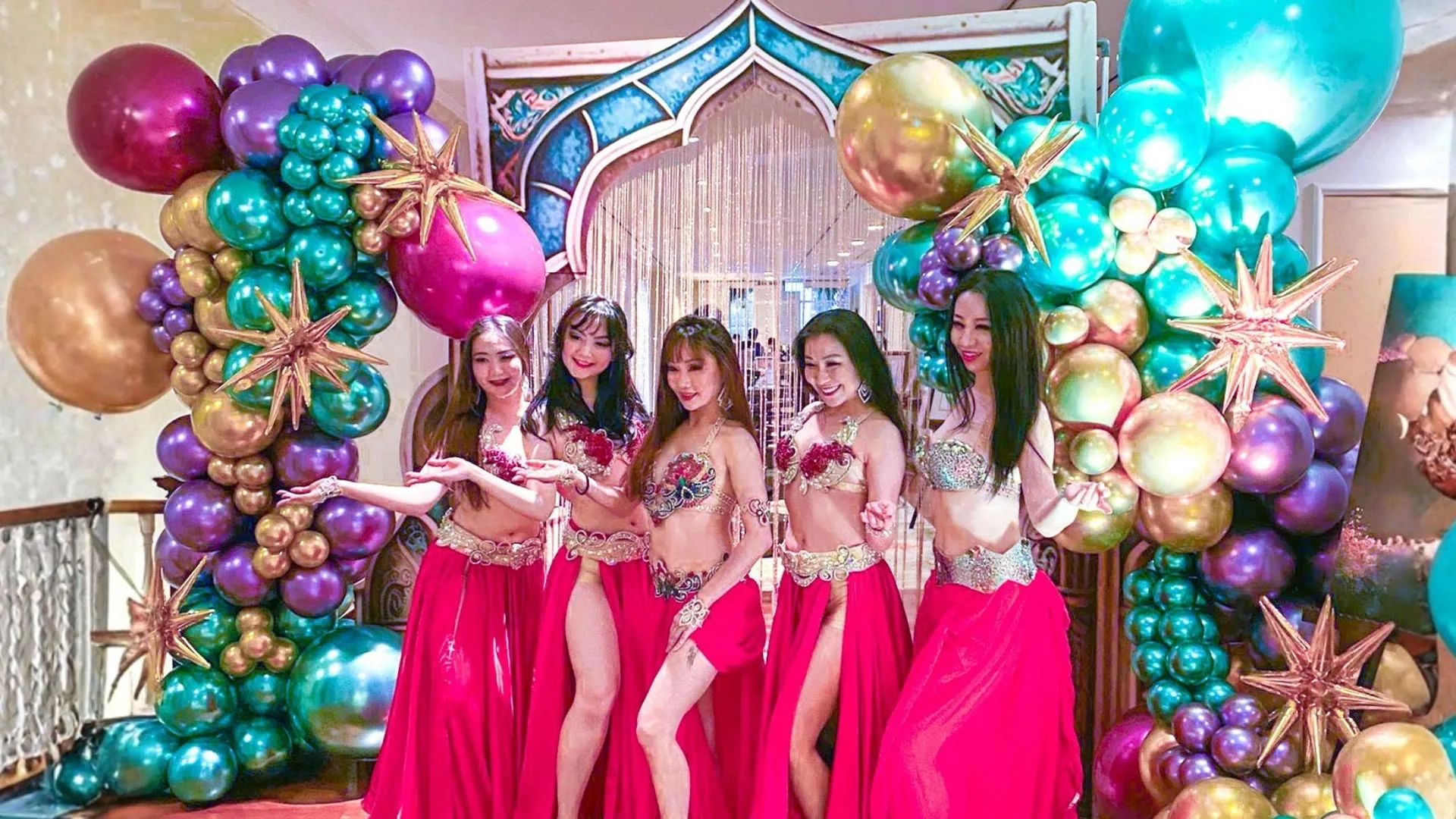
A live opening act can transform a ballroom from a dining space into a show environment. Percussion, dance, vocal performance or a visual act can work well when the entrance is rehearsed and the technical setup supports it. The choice should reflect the event concept rather than simply using the loudest option. A premium theme may need elegance and precision, while a playful celebration can welcome more audience interaction.
Keep the opening focused. Guests are still settling, so an act that reaches its key moment quickly will usually land better than a long performance with a slow build. Confirm performer access, ceiling height, stage dimensions, special effects restrictions and the venue's sound limit. If the act begins among the audience, protect service routes and give venue staff a clear movement plan.
- Live band or vocal feature
- Dance or percussion ensemble
- LED or visual performance
- Theme-led character entrance
- Employee talent reveal with professional support
Make participation comfortable for different personalities
Corporate audiences include confident volunteers, quiet observers, senior leaders, new employees and colleagues with different physical abilities. Participation works when people can join at more than one level. A table challenge may involve one representative, a quick group decision and cheering from the rest of the table. This produces collective energy without forcing every guest into the spotlight.
The host is critical. Instructions should be short, visible and demonstrated before the clock starts. Avoid activities built around humiliation, personal disclosure or skills that exclude a large part of the room. If the organisation is culturally diverse, review references and humour carefully. The aim is to create a shared story colleagues enjoy retelling, not a moment someone wishes had never happened.
- Table-based quiz with visual and music rounds
- Fast creative challenge linked to the company theme
- Audience voting using simple physical or digital cues
- Collaborative mystery or clue sequence
- Short team performance with optional roles
Create a meaningful company-specific segment
An entertainment moment becomes more memorable when it could only happen at that company. A carefully produced employee film, a live performance built around company milestones or a creative reveal involving familiar people can carry more emotional weight than a generic act. The material must be edited with care, kept concise and tested with the same production standards as an external performance.
Use internal references that the wider audience can understand. A joke known only to one department will not hold a ballroom, while a shared achievement or recognisable workplace moment can bring everyone in. Get permission for photographs and video, verify names and protect confidential information. Company-specific content should make people feel seen, not expose anyone without their agreement.
- Milestone film with employee voices
- Leadership reveal with a creative twist
- Company story told through music or movement
- Recognition montage that supports an awards chapter
- Interactive timeline guests can contribute to
Match the act to the room and production setup
An idea is only workable when guests can see and hear it. A low stage, deep ballroom or large centrepiece may block sightlines. Spoken comedy can struggle in a room where service continues. A roaming act needs safe paths and enough space between tables. Review the room plan, screens, lighting, sound system and service schedule before confirming the entertainment, not after contracts have been signed.
Ask each performer for a technical rider and translate it into the event's master production plan. Confirm microphones, playback, monitors, power, rehearsal time, changing space and storage. If an act needs a reset, decide what guests will experience during that transition. Good production makes entertainment feel effortless because the practical work has been solved out of sight.
- Check stage size, ceiling clearance and sightlines
- Confirm venue rules for effects and sound
- Schedule soundcheck and performer call times
- Keep meal-service routes clear
- Prepare approved backup media and music
Build a balanced entertainment mix
More entertainment does not automatically create a better dinner and dance. A useful mix often includes one arrival or opening detail, one participatory moment and one feature performance or social finish. Awards, speeches and the dinner itself already create programme changes. Let each entertainment choice do a distinct job instead of repeating the same energy in a different costume.
Review the mix from the guest's point of view. Can they talk during arrival? Do they have uninterrupted time to eat? Is there a reason to look up when the room needs focus? Can they participate without leaving personal belongings repeatedly? Does the final segment feel earned? When these questions are answered, the entertainment becomes part of a coherent experience rather than a list of acts.
- Choose one clear feature rather than several similar acts
- Alternate watching, participating and social time
- Keep key moments away from active food service
- Allow enough time for applause and transitions
- Finish with the energy you want guests to take home
Planning your company event?
Tell us your date, headcount and what the event needs to achieve. We can plan an event around your people and your brand.
Plan your event