
Large-Group Team Building in Singapore: An Operations Checklist
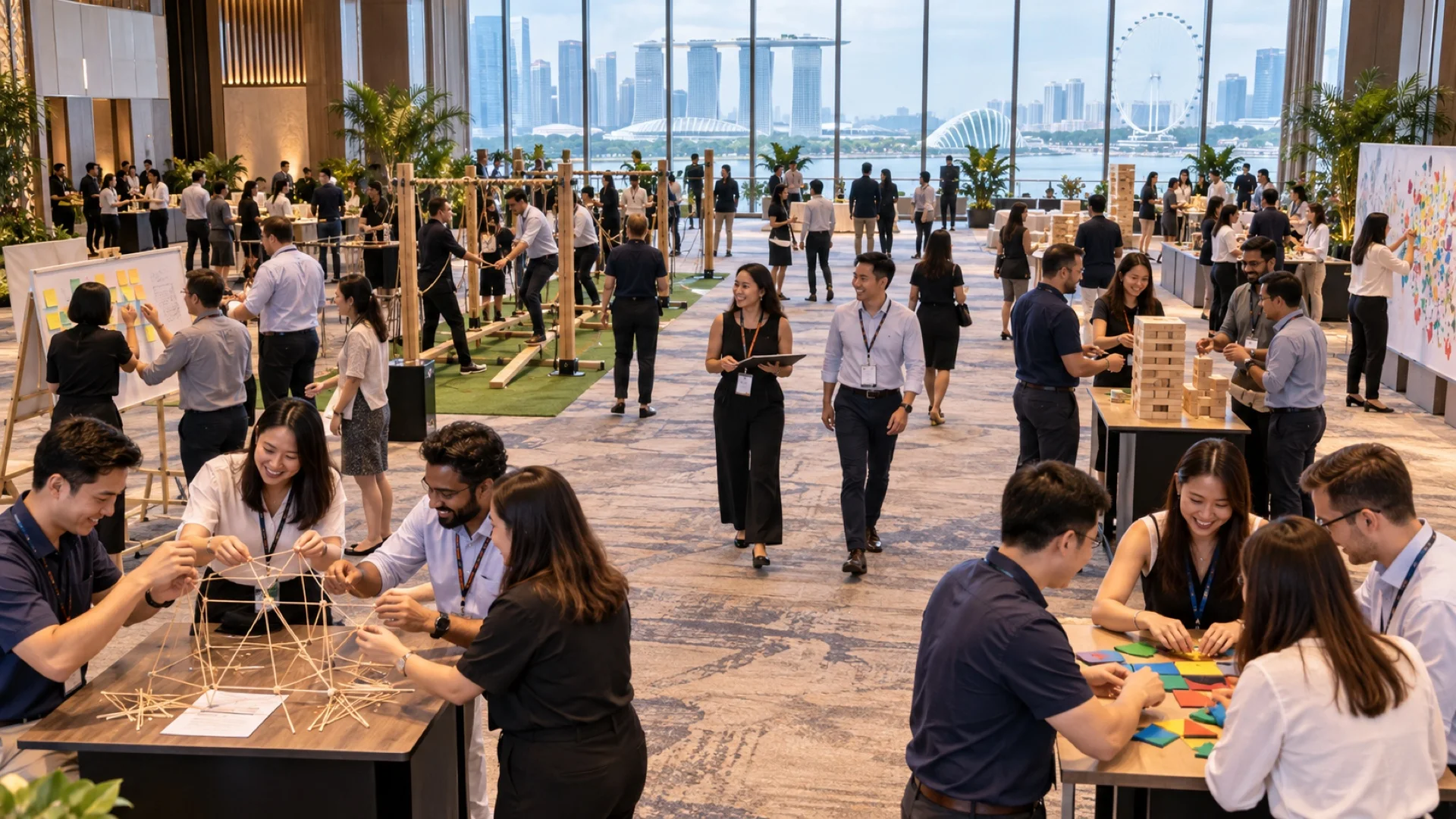
Plan large-group team building around parallel zones, hosts, rotations, weather decisions and a shared finish so everyone can participate.
Define large by the operating plan, not a fixed number
A group becomes operationally large when one host, one activity space or one arrival point no longer serves everyone comfortably. The threshold depends on venue layout, activity duration and how participants move. A headcount that works in a ballroom workshop may overwhelm a narrow corridor or a single outdoor checkpoint.
Start with a participant-flow sketch. Show arrival, registration, briefing, activity zones, breaks, toilets, food and the final gathering. If people converge at the same point at the same time, the programme needs another route, another host or a different rotation. This is more useful than choosing an activity by its maximum advertised capacity.
Select formats that can run in parallel
Station challenges, hosted team rotations and a shared creative task can scale when each group receives clear instructions and comparable time. A race across several locations can also work if routes and checkpoints are designed for the actual number of teams. One long queue for one popular activity is not a large-group format, even if everyone eventually gets a turn.
Choose the activity mechanics before the theme. Confirm station throughput, reset time, equipment per team and how the experience stays fair when different groups begin at different points. Keep an alternative role for participants who prefer lower physical demand.
- Parallel capacity at each station
- Short and consistent briefing
- Enough materials for simultaneous teams
- A common way to bring the programme together
Map space, movement and holding areas
A floor plan should mark every zone, directional route and place where a team waits. Allow space around activity tables so a passing group does not interrupt people playing. Registration and food queues should not block entrances or accessible routes. Where activities use sound, place quiet stations away from hosts with microphones.
Walk the route at the venue if possible. Include travel between rooms or outdoor checkpoints in the run sheet, especially when the group contains people with different mobility or walking speeds. Share the planned zones and expected occupancy with the venue before confirming the format.
Allocate teams with participation in mind
Team size should follow the mechanics of the activity: enough people for useful collaboration, but few enough for each person to have a role. Larger teams can hide quiet participants and slow decisions. Test the proposed group size by asking what each person will actually do at a station.
Decide whether to mix departments, keep existing teams together or combine both across rounds. Pre-allocate groups when arrival time is tight; use a simple identification method that does not rely on reading a distant screen. Keep a process for late arrivals so they can join without delaying everyone.
Give every zone a host and the same rules
A central emcee cannot manage every station. Each zone needs a host who can explain the task, keep time, resolve basic questions and pass issues to an event lead. Provide one written rule set, one timing cue and a clear way to record outcomes if there is scoring.
Brief the hosts together before doors open. Rehearse the rotation signal, what happens when a group arrives early and who can adjust timing. A short participant briefing should explain the overall map, the first destination and the return point without overwhelming people with every station's rules at once.
Build contingencies before announcing the programme
For an outdoor plan in Singapore, define the weather trigger, decision owner and indoor branch before sending the invitation. The fallback needs enough capacity and materials to work, not simply an available empty room. Also plan for a delayed start, a station becoming unavailable and attendance differing from the first estimate.
Keep key changes communicable in one message to hosts and one short announcement to participants. If a rotation is removed, preserve a coherent programme and a shared closing rather than leaving some teams with no final activity.
Finish as one group and brief the organiser clearly
Bring teams together for a short reveal, shared construction, recognition moment or facilitated close. The ending should make sense whether the activity is competitive or collaborative. Allow time for returning from zones, collecting materials and moving into the next part of the company day.
Send the organiser the attendance range, venue plan, date, available hours, participant mix, access needs and decision process. Happier's team-building page covers the service, and its large-group ideas guide covers activity examples. This checklist focuses on the operations that make a large format enjoyable rather than chaotic.
Planning your company event?
Tell us your date, headcount and what the event needs to achieve. We can plan an event around your people and your brand.
Plan your event